Psycho Party
A narrative design and psychological gameplay project about fragmented identity, memory, and mental survival.
Psycho Party began as a game concept and experimental project.
At an early stage, I assembled a small development team to work on the first chapter, involving artists, a programmer, and a musical collaborator.
The project stopped at the concept and preliminary production stage because work and personal commitments made further development impossible.
Some concepts and assets shown in this section come from that initial phase and are used with acknowledgement and thanks to the people who took part.
The remaining visual material provides conceptual support for presenting Psycho Party as a narrative design project.
GAME OVERVIEW
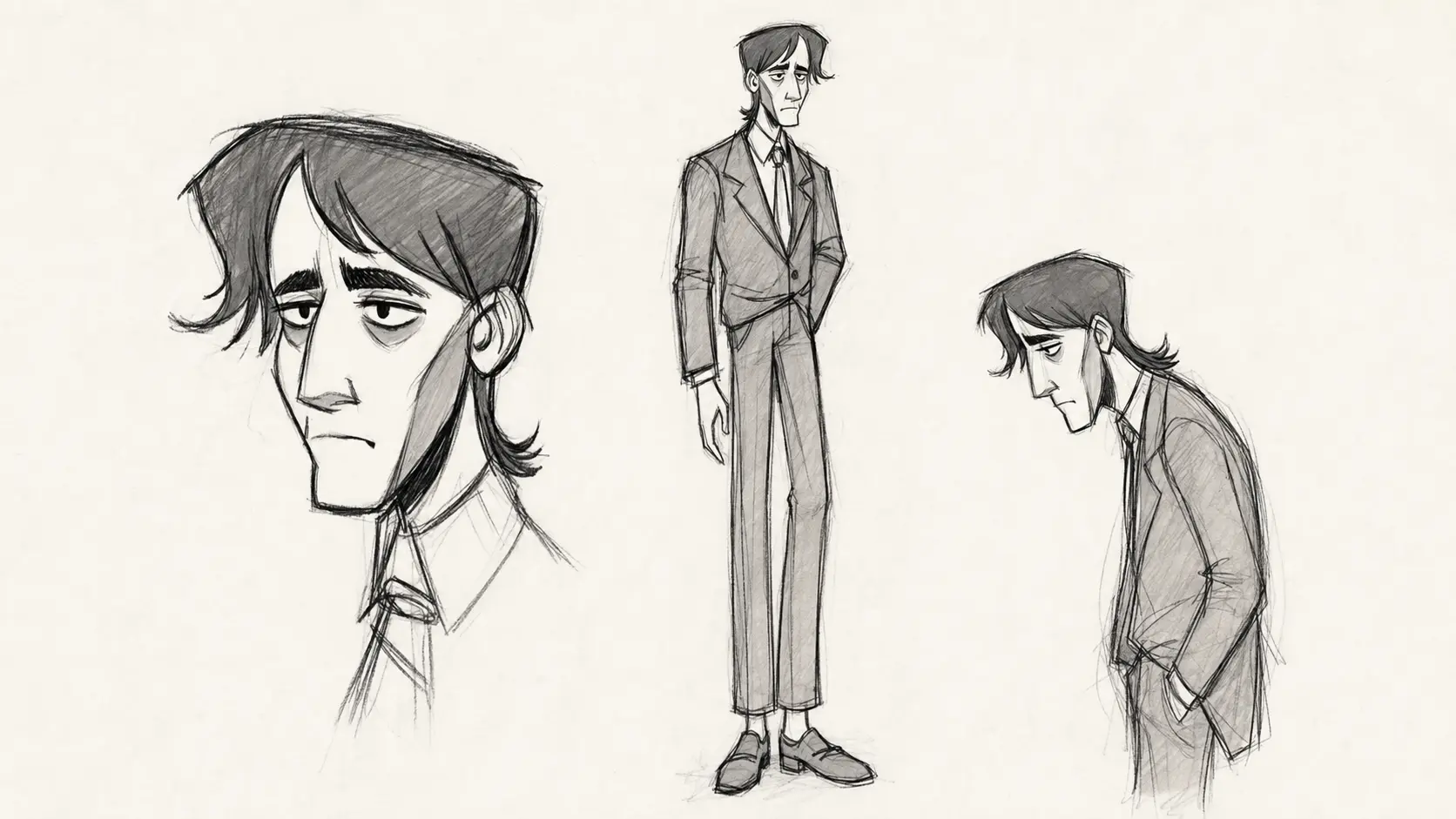
Norm shares his life with four personalities: Bear, Lord, Sofin, and Tristan.
Living with them is neither a sudden loss of control nor a recent event.
It is a condition Norm has learned to live with, maintaining a fragile balance through mesmerism and constant work on himself.
In Psycho Party, the player controls Norm through a linear storyline, which develops differently depending on which personality is brought forward at key moments. Norm always remains Norm, but his way of inhabiting the world changes: his attitude, language, relationships, and possible actions.
The game combines exploration, point-and-click-style environmental puzzles e narrative choices. To progress, the player must observe, gather information, connect events, and decide whether to face situations neutrally or rely on one of the personalities.
During the first chapter, Norm becomes involved in a murder that appears to lead back to him. The evidence is concrete, although he has no memory of it. From that point on, the game moves between investigation, the management of everyday life, and attempts not to lose internal control.
Psycho Party tells of the attempt to remain present while one’s own parts demand space, voice, and recognition.
It is not about choosing who to be, but understanding how to keep living alongside yourself.
GAMEPLAY DYNAMICS
The gameplay dynamics of Psycho Party revolve around managing Norm’s internal balance and the way that balance affects actions in the outside world.
The player always controls Norm. At specific moments in the story, they can choose whether to face a situation without activating any personality or bring Bear, Lord, or Sofin forward, temporarily adopting their attitude and abilities. Tristan is not a direct choice, but a constant presence affecting Norm’s internal state.
The switch between personalities is limited. Every use consumes an internal resource representing the control Norm maintains over his parts. If that resource runs out, Norm loses control over the personalities and the game ends.
Switching does not create separate characters. Norm remains the same individual, but the following change:
- the way he speaks
- the way others perceive him
- the relationships available to him
- the solutions available to the same problems
Progression occurs through exploration, interaction with the environment e point-and-click-style puzzles, which are required to unlock new scenes and move the plot forward.
Choices do not produce scores or moral judgements, but permanently alter the course of relationships and the world’s perception of Norm.
There are no traditional game overs based on single mistakes. Consequences are cumulative and, over time, lead either to the loss or preservation of internal balance.
THE PERSONALITIES
In Psycho Party, the personalities are born at specific moments in Norm’s life. They emerge as functional responses to events, contexts, and pressures that Norm cannot sustain alone.
Each personality has a precise function: supporting Norm when one part of himself is not enough. Over time, what begins as adaptation becomes an autonomous presence that is difficult to contain.
The personalities are neither choices nor conscious constructions. They are necessary solutions that emerged to allow Norm to keep living.
There are four: Bear, Tristan, Sofin, Lord.
BEAR
Origin
Bear is born after the death of Brutus, Norm’s older brother. During the funeral, Norm’s father Alan spits on his dead son’s grave, showing contempt for him even in death. This act of scorn and disrespect causes a mixture of love for his brother and rage towards his father to erupt in Norm.
This intense reaction leads to the creation of Bear, a personality able to embody the strength and masculinity admired by Norm’s father, but also the love and protection Brutus represented for Norm.
Bear is the first personality to emerge, showing that Norm’s endurance reached its limit with his father’s gesture. Bear represents a protective reaction and a compensating force against the apathy and emptiness left in Norm by his brother’s death.
Characteristics
- Masculinity — Embodies Norm’s father’s ideal of masculinity: sturdy and virile.
- Orientation — Gay, but with a physical presence and strength that compensate for his father’s negative perception.
- Occupation — Truck driver, a symbol of independence and solitude.
- Childishness — Bear is Norm’s most childlike personality because he emerged first. He seems not entirely formed, reflecting a simplicity and vulnerability expressed through his need both to protect and be protected.
- Solitude — Bear is comfortable in solitude, often emerging during long night drives or moments of solitary reflection.
- Signature line — “The next person who signals me to honk gets their arm broken.”
Appearance
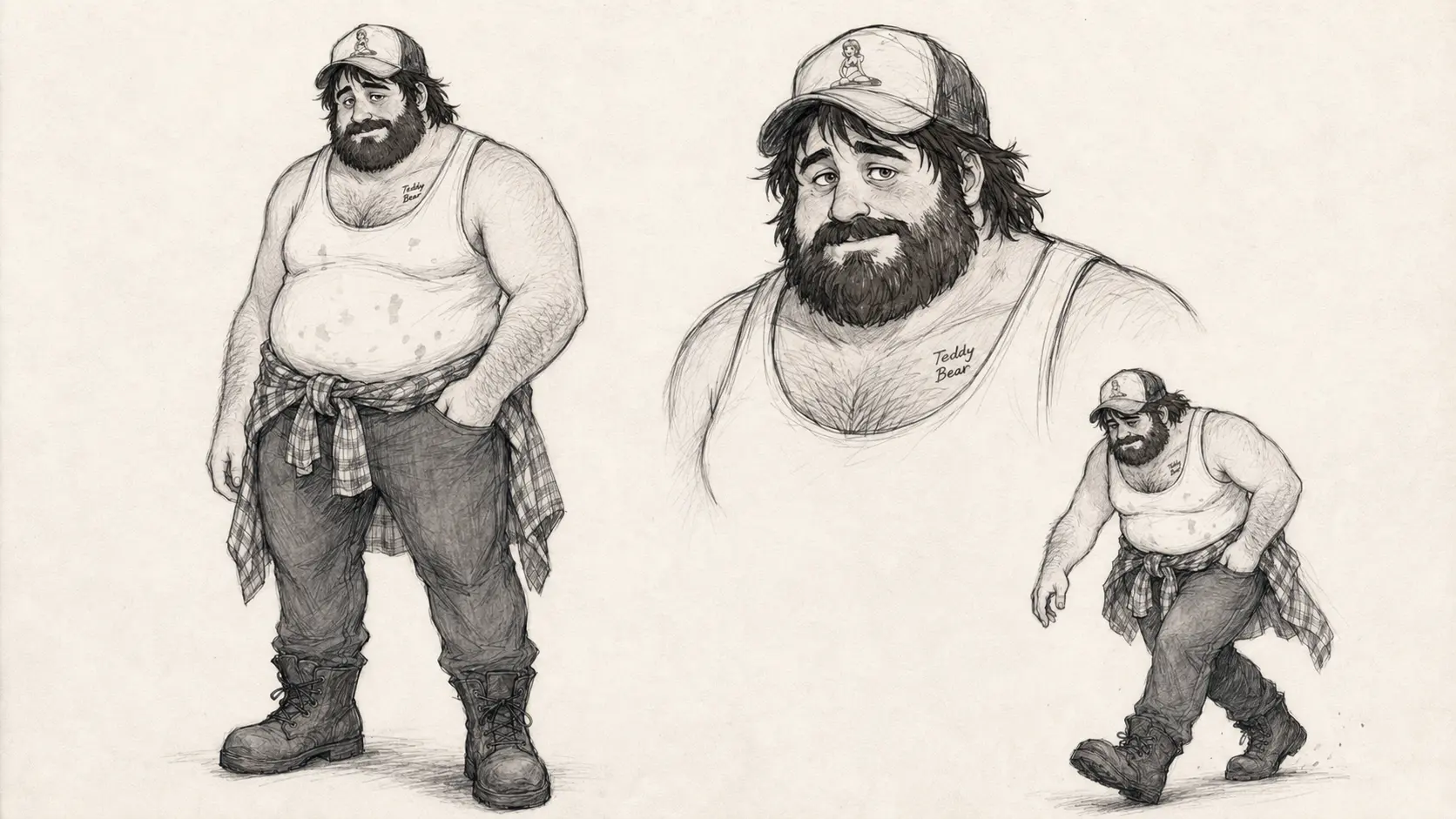
- Clothing — Bear usually wears a white tank top, often stained with pizza grease, jeans, and boots. In cold weather he adds a flannel shirt, either worn or tied around his waist. He wears a cap bearing a drawing of a naked woman. He wears no jewellery.
- Tattoo — Near his heart is a tattoo reading “Teddy Bear”, a symbol of the love he shared with Teddy.
- Movement — Posture: clumsy and heavy. He moves one leg at a time, as if considering every step. Behaviour: he spends his evenings drinking and, if someone angers him, fighting. Voice: gentle when he speaks, but rough and threatening when angry.
Relationship with Norm
Bear represents the masculinity and strength Norm’s father admired, but he is also a figure Norm created to protect himself from paternal violence and criticism.
He embodies many of Brutus’s characteristics, Norm’s older brother, who often defended him from their father’s abuse.
Bear emerges in situations requiring physical strength and protection, especially when Norm feels threatened or overwhelmed:
- situations of physical danger
- moments of intense emotional stress
- confrontations with authority figures reminiscent of his father
Bear offers Norm a safe refuge while embodying an ideal of power and independence.
TRISTAN
Origin
Tristan is born during Norm’s adolescence, a period marked by difficulties at school, social misunderstanding, ridicule from peers, and emotional frustration. After Brutus’s death, Norm struggles to communicate and retreats into 1970s horror films and thrillers, which become both an escape and a source of powerful emotions capable of shaking him out of emptiness, apathy, and abandonment.
Those around Norm see neither a strong reaction in him nor a desire to carry on his brother’s dreams. This misunderstanding feeds Norm’s desire to destroy everything, wipe the slate clean, and be left alone—but only after unleashing his violence.
Tristan is born in response to this need. He is a distorted version of what others would like to see in Norm: the carefree aggression of the stereotypical high-school boy Norm never was. Norm lives in fear; Tristan becomes fear itself.
Characteristics
- Manipulative and sociopathic — Tristan is skilled with words. He adapts to become the perfect friend, lover, or colleague, making his true intentions impossible to read.
- Gratuitous violence — Like the killers in Norm’s favourite films, Tristan takes pleasure in causing pain. Violence is, for him, a pure form of expression: disturbing and celebratory.
- Intelligence and strategy — Tristan is extremely intelligent and plans his actions carefully. Violence is only a means; control is the true objective.
- Absence of remorse — To him, victims are “bags of flesh and bone”. He feels no empathy and recognises no human value in others.
- Duality — Outwardly charming and charismatic, inwardly cold and calculating. He can attract and destroy with equal ease.
- Collective violence — Tristan never kills only one person. Every murder is an event, a celebration requiring multiple victims.
- Parties and confetti — Confetti are the signature element of his rituals, thrown during and after killings to celebrate chaos and violence.
- Rituals of terror and control — Influenced by pagan cults and the film The Wicker Man, Tristan constructs complex rituals to terrorise and dominate his victims.
- Signature line — “They’re my bags of flesh and bone. I like shaking them and hearing the noise they make.”
Appearance
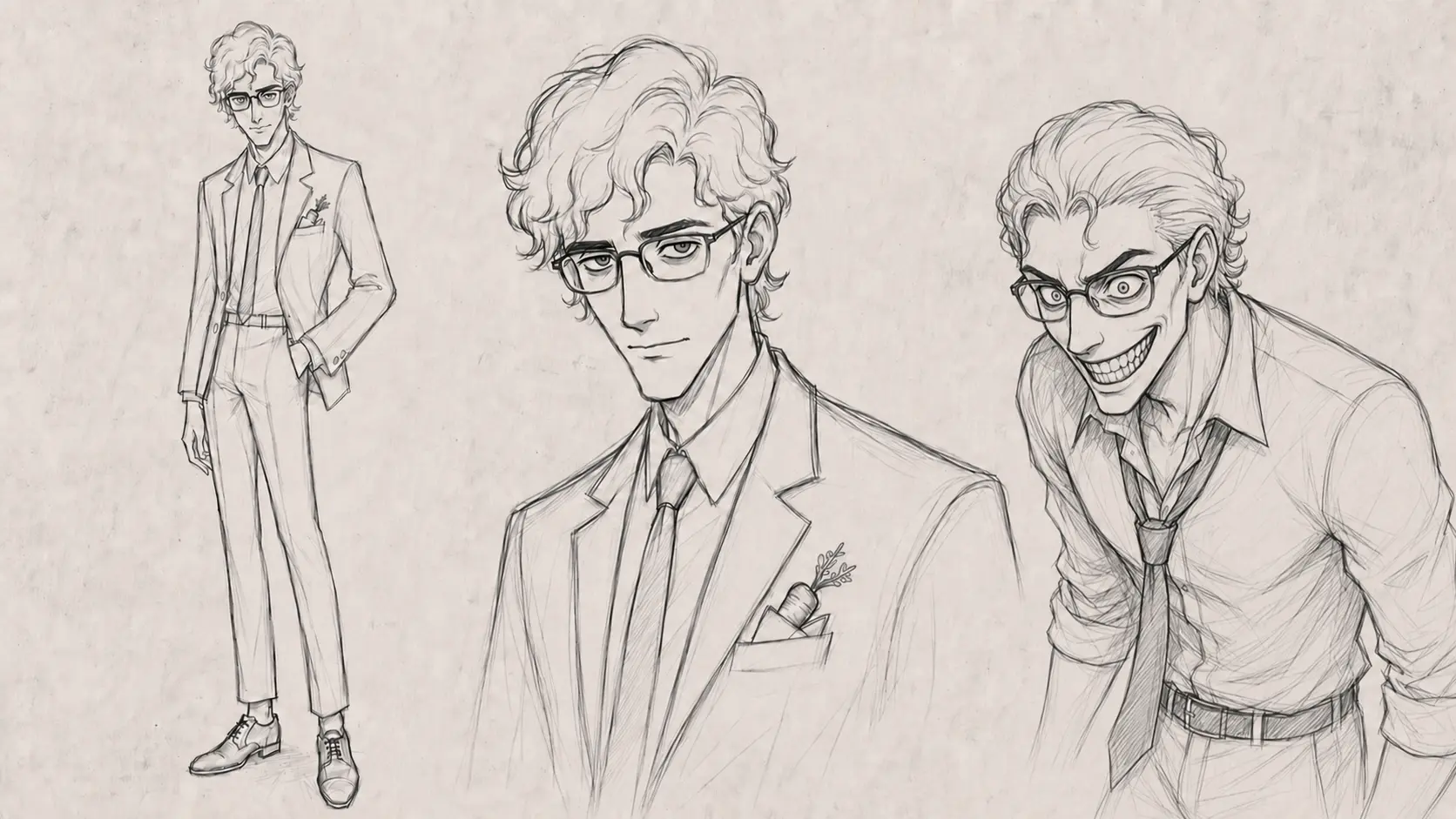
- Clothing — Tristan dresses like a Harvard or Oxford professor: respectable clothes, restrained colours similar to Norm’s, and no conspicuous details except a pocket square.
- Accessories — He wears glasses. In his pocket square he hides a carrot, which he snaps to relieve anxiety: the sound reminds him of breaking bones.
- Masks — At LSD-fuelled parties he wears homemade masks inspired by Batman’s Scarecrow.
- Movement — Posture: he walks upright but tends to lean to one side. He often keeps one hand in his pocket to hide the crooked posture and play with a coin.Behaviour: always looking for guests for his parties. Despite his respectable appearance, he is profoundly alone.
- The coin — After being beaten alongside a Chinese boy, Tristan receives from him a Chinese coin with a hole in its centre. It becomes a symbol of humanity’s confusion and complexity: a gesture of gratitude Tristan cannot understand, yet keeps as a reminder of a spark of goodness in the shadows.
Relationship with Norm
Tristan is Norm’s second personality, less childlike than Bear but more three-dimensional.
He emerges to face Norm’s adolescence by turning fear into a weapon.
Where Norm endures, Tristan reacts by destroying.
Where Norm is paralysed, Tristan acts without limits.
Tristan embodies a dark force that allows Norm to survive emotionally, at the cost of uncontrollable violence and a progressive loss of empathy.
He is a personality who protects Norm by destroying everything around him, including the boundary between defence and annihilation.
SOFIN
Origin
Sofin is born during Norm’s college years, when Norm feels profoundly isolated and unable to adapt to the fashions, music, and trends of the time. Norm’s adolescence was closed off and solitary; at university, the computer becomes his best friend, revealing far too many secrets.
The digital world offers Norm a stable, predictable structure in contrast with a society he perceives as inconsistent and changeable. Numbers have no second face: 2+2 will always equal 4. They follow clear rules, unlike social norms, which change constantly.
Sofin emerges in response to this need for order, coherence, and refuge.
He is the personality who allows Norm to immerse himself in technology as a safe space, away from social pressure and emotional exposure.
Characteristics
- Intellectual and curious — Sofin is extremely intelligent, with a strong passion for technology, programming, and mathematics. He hacks in his spare time.
- Solitude and isolation — He is introverted and prefers the company of machines to that of people. This makes him the personality closest to Norm.
- Escape and concealment — Sofin does not fight directly. He specialises in escape, conflict avoidance, and using the environment and technology to disappear.
- Passion for reading — He is a voracious reader, particularly interested in texts dealing with illness and dark subjects such as tuberculosis.
- Relationship with silence — Sofin speaks little and often whispers. Silence is a form of protection.
- Signature line — “I’m thinking of becoming deaf, so I can hear only myself.”
Appearance
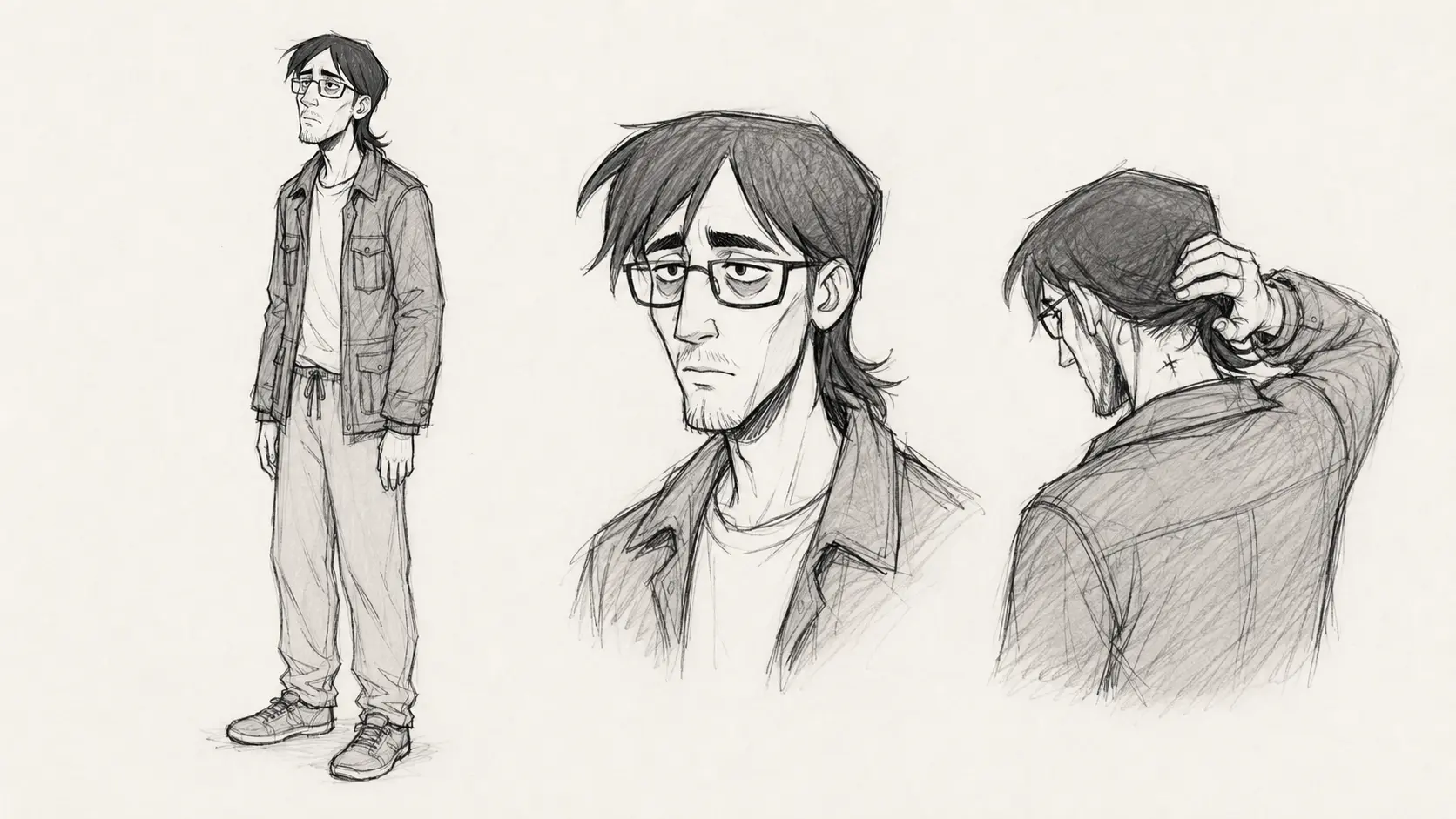
- Clothing — Sofin dresses for comfort. He wears tracksuit bottoms and a white top. In cold weather he adds a military-green jacket.
- Accessories — He always wears glasses. He has a scar on the back of his head.
- Movement — Posture: similar to Norm’s, slightly hunched, but with his eyes on the horizon.Behaviour: he almost never speaks aloud, only whispers. He often scratches the back of his head where the scar lies.
- The scar — Sofin says the scar came from an incident in which his drunken father smashed a bottle over his head. This detail is probably a construction by Norm, created to find common ground with Sofin, the personality closest to being his friend.
- Russian origins — Although Norm has never been to Russia, Sofin has Russian origins. They probably stem from Norm’s reading and fascination with Russian literature, its profound and dark themes, and stories connected with tuberculosis.
Relationship with Norm
Sofin is the third personality to emerge and is the “friend” personality.
He represents a more defined, specialised stage in the fragmentation of Norm’s psyche, following the birth of Bear and Tristan.
He is the personality with whom Norm feels the greatest affinity: they share posture, silences, solitude, and the need for isolation. Sofin offers Norm a safe refuge in the digital world and the ability to face technological challenges with precision while avoiding emotional exposure and direct conflict.
Sofin embodies Norm’s attempt to be enough for himself, to find company and stability in an orderly virtual world, far from the contradictions and pressures of real life.
LORD
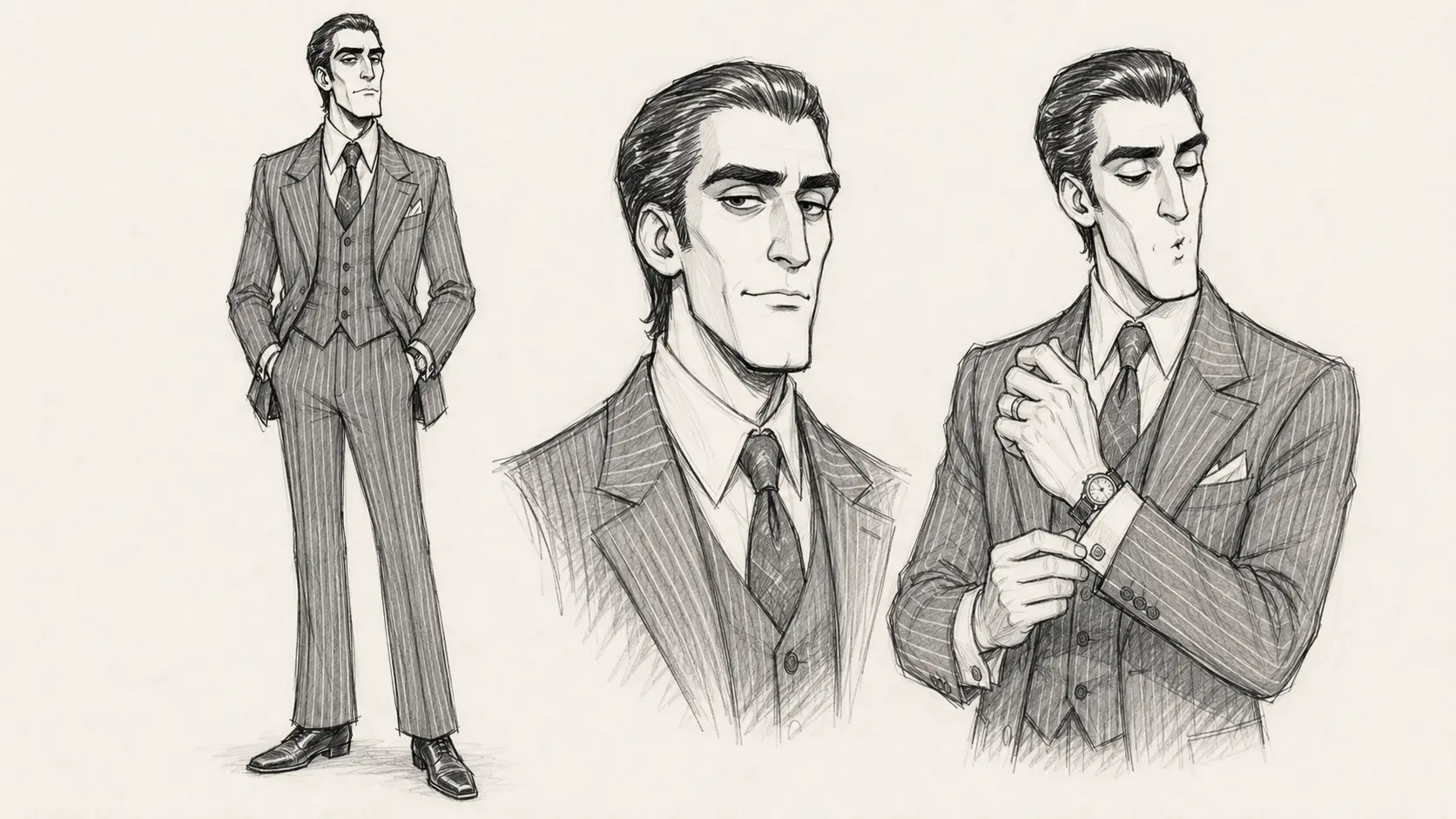
Origin
Lord is the last personality to emerge in Norm, during his training and internship as a court transcriber. In this phase of his life, Norm comes into direct contact with corruption in the justice system and the power dynamics governing society.
The experience makes him feel inadequate and unsuited to the world around him. During the same period, Norm develops feelings for someone who is quickly “swept away” by the stereotypical bad boy. This reinforces his conviction that authenticity, truth, and sincerity lead only to further solitude.
Norm understands that following the rules means earning less and being mistreated, while cunning and opportunistic adaptation are rewarded.
From this awareness Lord is born: a personality created to navigate a reality perceived as corrupt, where honesty has no functional value for survival.
Characteristics
- Manipulative and cunning — Lord is extremely skilled at manipulating situations and people to his advantage. Cunning is his primary tool.
- Disenchanted and cynical — He no longer believes in rules and honesty as foundational values. To him, authenticity is weakness.
- Ambitious and opportunistic
- He is driven by powerful ambition and exploits every opportunity to advance in his career and life, even by questionable means.
- Charismatic and persuasive — He has a powerful presence and persuasive skills that he uses to influence and control others.
- Signature line — “The winner is not the best person, but the one who can prove they are.”
Appearance
- Clothing
- Lord embodies the cinematic gangster archetype. He wears an impeccable, fashionable suit and follows current trends.
- Accessories
- He always wears a watch. He wears no jewellery except his wedding ring, along with polished shoes and personalised solid-gold cufflinks given to him by his wife. In the 1970s, solid-gold cufflinks were generally 18 carats.
- Movement — Posture: chest out, gaze full of confidence and charisma.Gait: he walks upright and proud, often with his hands in his pockets.
- Behaviour — He prefers to keep his hands hidden because he carries a miniature syringe containing a substance he uses to defend himself when threatened. A weapon is concealed in his left sock, and he often whistles.
Relationship with Norm
Lord represents Norm’s disillusionment and cynicism towards society and its rules. He is Norm’s answer to a world perceived as corrupt and unjust, where opportunistic adaptation is the only winning strategy.
Through Lord, Norm attempts to fill his perceived shortcomings: his difficulty standing out, competing, and obtaining recognition and stability.
Lord is the personality who enables Norm to enter the system by accepting its implicit rules and abandoning any ideal of purity or transparency.
WORLDBUILDING
A world without decisive wars
In the world of Psycho Party, the World Wars never happened. There was no total destruction and no forced reconstruction. Cities were never razed and reimagined: they simply grew old.
The absence of major conflicts prevented collective trauma, but also blocked radical change. Social tensions did not explode; they became encrusted.
Power was not challenged; it adapted.
The result is a world that appears stable but is profoundly stagnant.
Advanced technology, unfinished progress
Without the impetus of war, technological progress was slower and uneven. Advanced technologies exist alongside obsolete systems. Computers, recorders, telephones, and power grids function, but unreliably.
Nothing is truly new. Nothing is truly broken. Everything is worn out.
Norm’s city
Norm lives in a great city suffocated by smog and corruption, a place that has never collapsed but has never been renewed.
Its architecture mixes well-preserved historic buildings with modern structures left to rot. Unfinished skyscrapers coexist with Art Nouveau palaces, neoclassical courthouses, and medieval streets.
The city is not a battlefield. It is a working landfill.
A society that does not change
Society is strongly stratified. The rich live in protected, orderly areas. The poor survive in decaying districts where crime and compromise are the norm.
Corruption is not the exception: it is the method. Justice exists as an institution, not a value.
The courthouse where Norm works is one of the city’s oldest and most respected buildings: solid, monumental, intact. A symbol of stability—and therefore a symbol of hypocrisy.
Permanent Seventies
The world’s aesthetic is frozen in the 1970s—not through nostalgia, but inertia.
Iconic furniture, saturated colours, and bold design coexist with neglected, decaying environments. Interiors speak of an era that promised freedom but never truly delivered it.
It is a world that dreamed of change without achieving it.
A world that does not save
In this world there is no systemic redemption, no revolution on the horizon, no better elsewhere except the one imagined.
Psycho Party does not depict a world that breaks people. It depicts a world that leaves them alone to bear the weight.
MESMERISMO
In Psycho Party, mesmerism is neither therapy nor a romantic esoteric practice. It is a tool of cognitive control. An imperfect method learned by Norm to maintain cohesion among the personalities and prevent the system from collapsing.
Norm uses it to define internal boundaries, establish turns of intervention, and contain the most invasive personalities. Mesmerism does not eliminate Bear, Tristan, Sofin, or Lord. It allows him to negotiate with them.
Narrative function
Mesmerism explains why the personalities:
- do not emerge continuously
- can only be activated at specific moments
- carry a cost whenever they take control
It is the fragile pact Norm has made with himself.
Gameplay function
Mesmerism is the resource governing the switch.
- Every switch consumes one charge.
- Charges are limited per chapter.
- Depleting them does not cause a conventional game over, but an irreversible breakdown of control.
Activation spaces
Mesmerism requires reflective surfaces. Mirrors, glass, water, polished metal.
The bathroom mirror scene in the first chapter is the first place where Norm manages to speak with several personalities at once. It is not the only possible space, but it is the only one fully structured in the prologue.
SECONDARY CHARACTERS
Gerry Miller
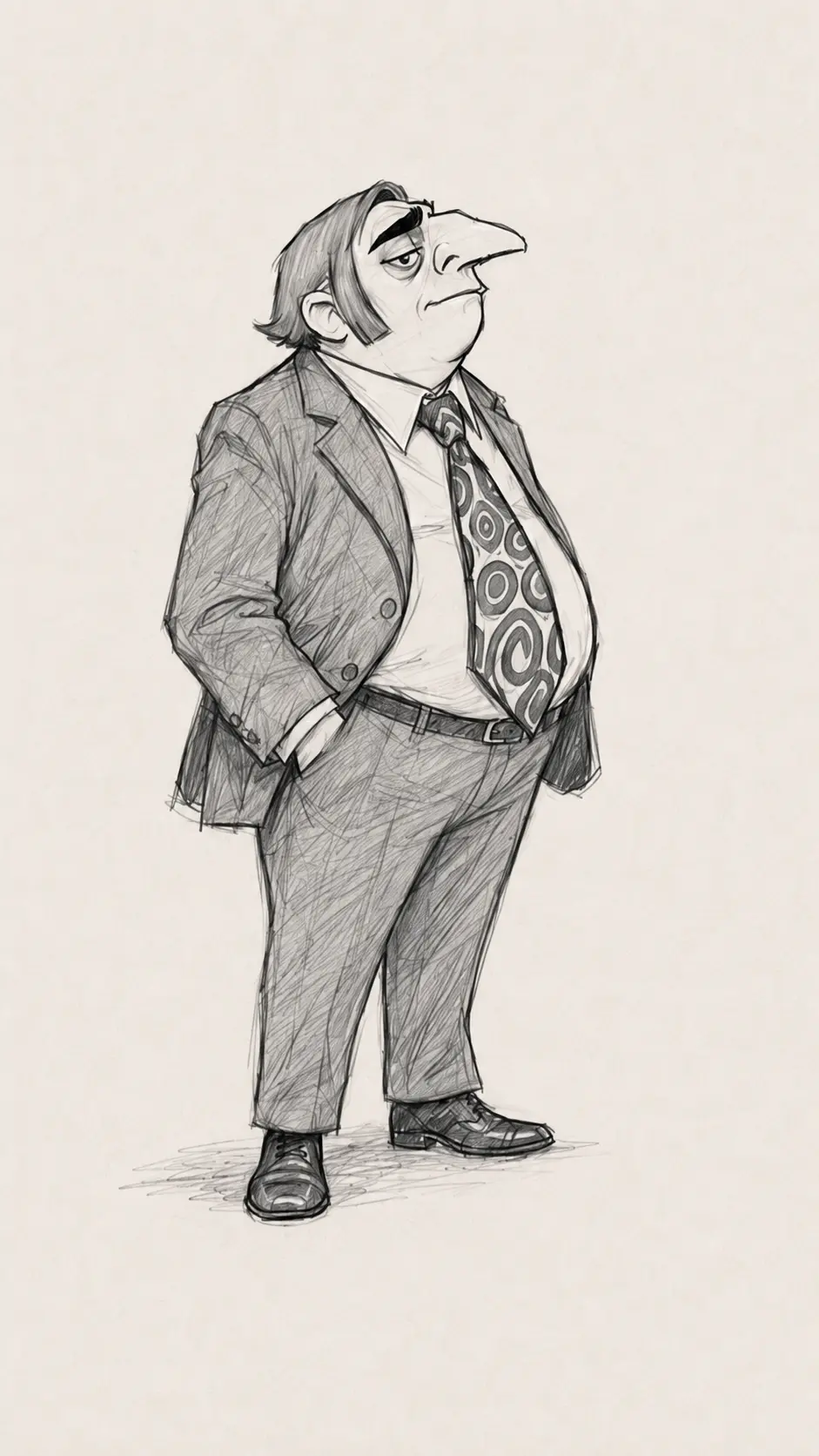
Gerry Miller is Norm’s direct supervisor: a short, stocky man with a disproportionate body, always in a suit and loud tie. He flirts with anything he can, uses drugs without excess, and cheats on his wife without remorse.
He is not mad. He is worse: he functions perfectly.
He obtained his position by helping the Big Boss during a demonstration. Complaints about his behaviour do not touch him. He is untouchable.
He never raises his voice with Norm. There is no need. He demands results, money, silence.
«Norm, I don’t care how, but I want that money on my desk by tomorrow.»
Donna Hart
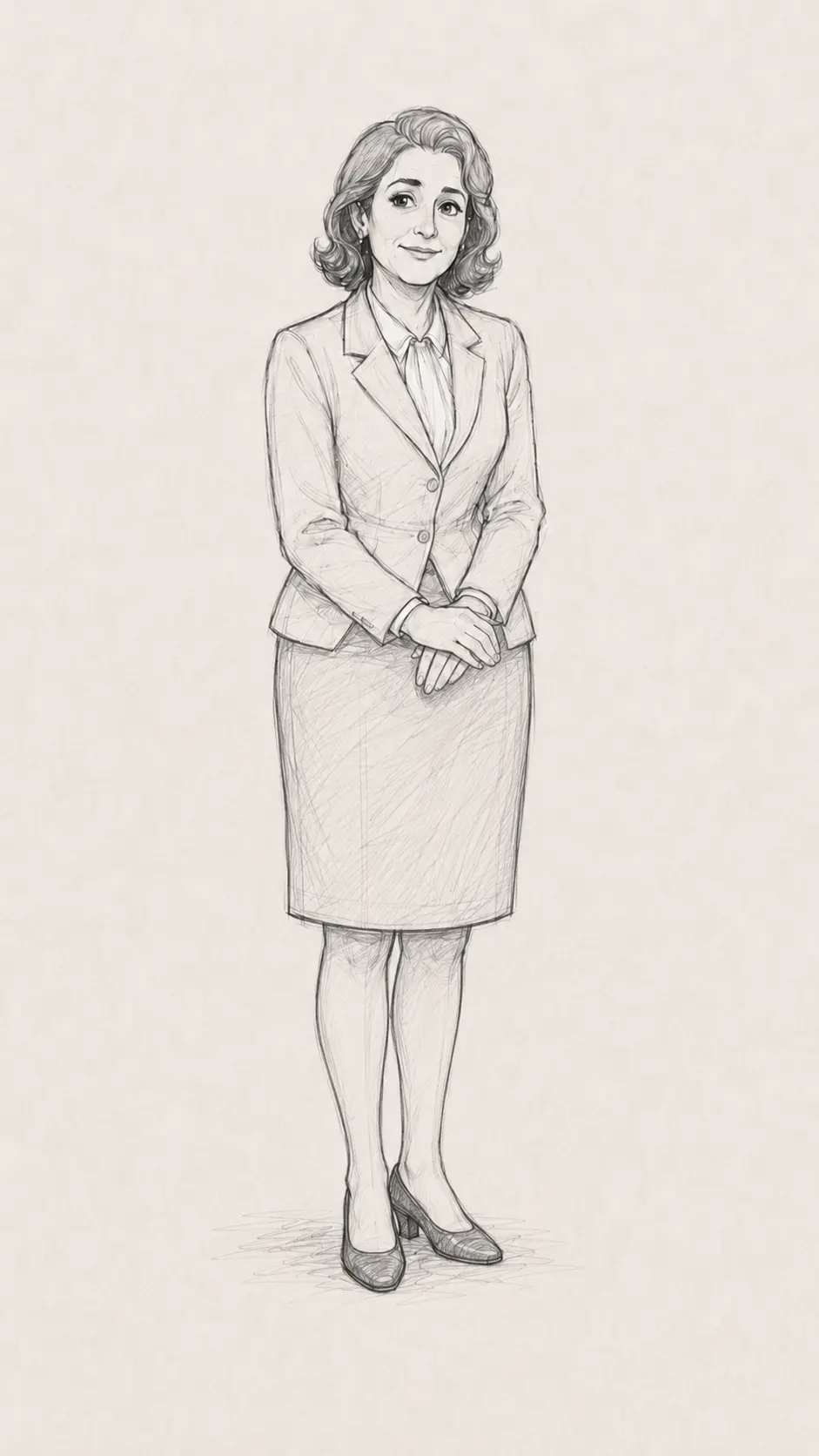
Donna is Norm’s colleague. Physically reassuring, always in a pastel-pink suit, she offers gentle smiles and constant attention.
She is the only person who seems to see Norm.
Donna listens. Welcomes. Smiles. But her empathy comes from years of bullying and solitude. She helps others to avoid looking at the emptiness of her own life.
She is integrated. Well liked. Socially present. Yet she is alone.
To Norm, she represents what he cannot be: someone who “functions” in society, even if there is nothing inside.
«You’re always so quiet, Norm. If you need to talk, I’m here.»
Michael Blackwood
Michael Blackwood never appears. He is a presence, not a body.
He works in an office with direct access to the car park. No one sees him in the corridors. His decisions arrive as missives left on desks.
The Big Boss is the very idea of power: distant, opaque, unreachable.
«…»
Detective Samantha “Sam” Spade
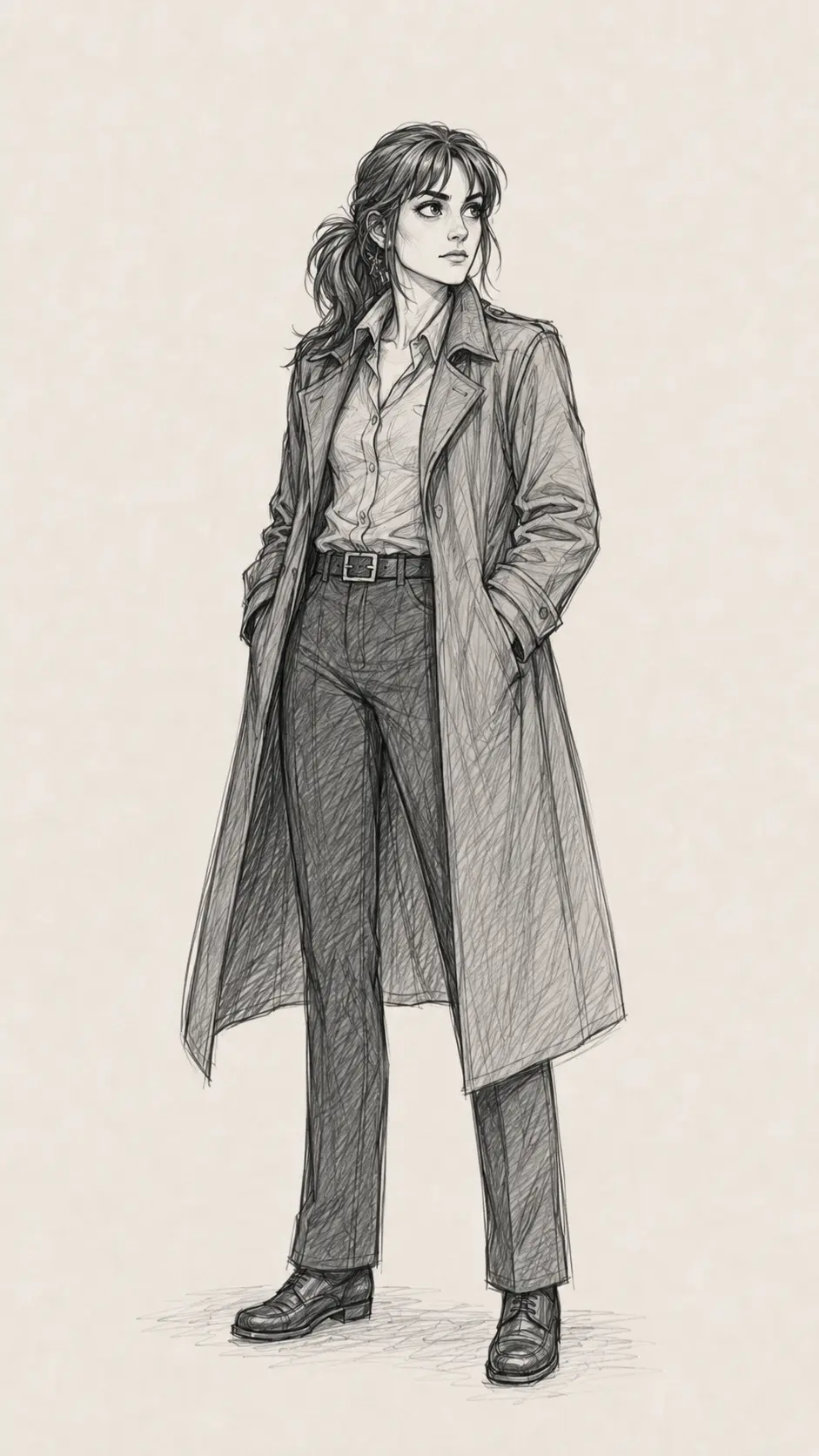
Sam is a detective who was raised to become one—not by choice, but to compensate for a disappointment.
Her mother, obsessed with noir, raised her like a hardboiled character. She gave her a masculine name and imposed a model upon her.
Sam interprets it literally. And is mocked for it.
She is competent but not believed; determined but isolated.
«No trail, no suspect—they handed it to a woman to make a fool of her.»
Teddy
Teddy is Bear’s former love. He exists only for Bear.
The other personalities do not remember him. Norm does not remember him. There are no images, only an emotional certainty.
«He was everything to me, even if no one remembers him.»
The Blank Brothers
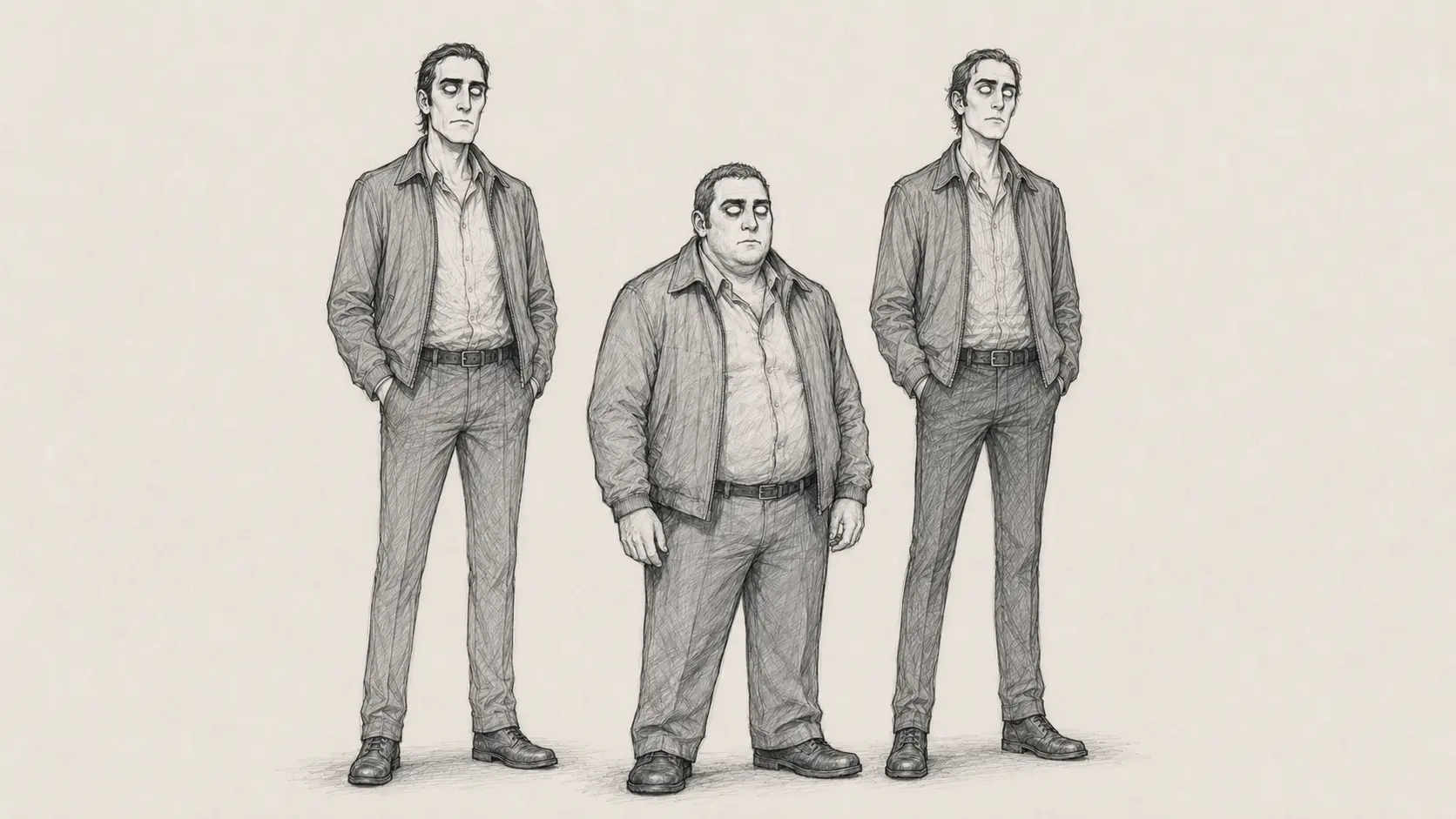
Vic, Donnie, and Reggie Blank work for whoever pays. Physically different, they share the same empty gaze.
They are not stupid. They are inert.
Lord has encountered them before: gambling, debt, mistakes. Outside the courthouse they do not hesitate to beat Norm.
«The Blanks erase you.»
Alec Starling
Alec is the university friend who introduces Norm to mesmerism. Popular, charismatic, charming—and profoundly fragmented.
He believes in controlling the mind, but not resolving it. He is an ally, not a solution.
He returns mainly in Act II as an adviser.
«Just because my personalities do not manifest does not mean I no longer have many faces.»
THE GRIM FAMILY
Alan Grim
Alan Grim is a man who despises everything that is not strength. To him, elegance, affection, and care are signs of weakness.
He raised his sons as tools. Brutus was meant to be the heir. Norm, a mistake.
When Brutus dies by suicide, Alan spits on his grave.
A note on the name Brutus
Alan Grim deliberately chooses the name Brutus for his eldest son.
In Alan’s reading, Brutus is the man willing to sacrifice everything for a higher ideal. Even family. Even blood. Alan sees Caesar’s betrayal not as guilt, but as proof of strength: the ability to sever ties when they become an obstacle.
By naming his son Brutus, Alan gives him a task before he gives him a life: be hard, be heavy, be willing to destroy if necessary.
«A real man relies on no one.»
Brutus Grim
Brutus wanted to protect Norm, but did so by hitting him. He believed controlled violence was better than their father’s violence.
He always wore a cap—the same one Bear would wear.
His suicide is the final fracture.
«Don’t worry.»
Giuliana Grim
Giuliana has stopped fighting. She drinks gin in her tea. Hides colours in a wardrobe.
Norm does not forgive her. Brutus does.
«There’s nothing I can do. That’s how the world works.»
NARRATIVE EXCERPTS
Short fragments of dialogue and action from different moments in the game, conveying its tone, internal conflict, and the identity-bound nature of its choices.
Sad cleaning
Context:
Norm wakes in a boiler room.
Tristan’s “party” is already over. Norm has to clean up.
NORM
Do I have to clean up again?
NORM
Tristan, you never waste time choosing… men, women, as long as they’re breathing before they end up in your hands… and how did you even get a bed in here?!
NORM
I hate this damned confetti…
Norm cleans the scene. Every gesture weighs on his mental stability.
Returning home
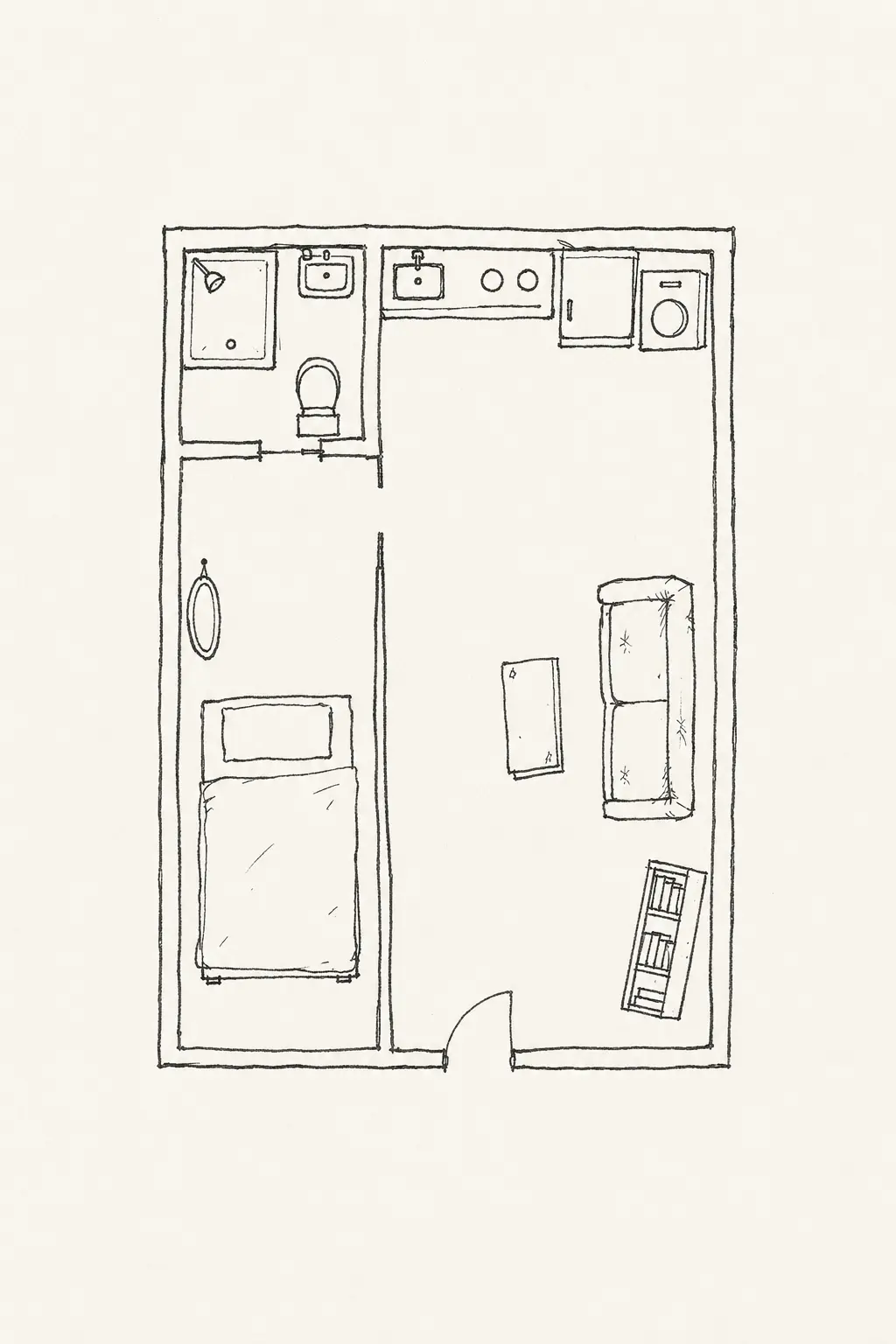
Context: Dawn. Norm’s apartment.
NORM
Tristan had fun all night.
NORM
It belonged to my father, to my childhood. It creaks because it’s old—or under the weight of memories.
NORM
I change the bulb every week. I like warm light. Sofin and Tristan prefer cold light. We set up a rota.
The player explores the apartment. Every object is a fragment of forced coexistence.
In the shower
Context: Bathroom. Hot water. Tristan interrupts Norm’s shower.
NORM
If I didn’t know it was blood, I’d find the pink water… enchanting.
TRISTAN
I would love to enjoy the shower in silence, without pointless insults.
NORM
You have to stop, Tristan.
TRISTAN
But I did stop, Norm… when you’re so stressed you can’t even pleasure yourself… well, I’m here.
The player can carry out everyday actions.
Every moment is inhabited by a different personality, revealing forced coexistence and the absence of privacy or time genuinely devoted to oneself.
The mind lobby
Context: Norm faints. He wakes in the waiting room of his own mind.
NORM
They’re like children; they have to be taught.
VICTOR BELLAMY
Would you like me to keep the lifts locked, sir?
NORM
No, Bellamy. Someone has “called” me.
Each lift leads to a personality. The mind becomes a physical, traversable place.
The office
Context: Norm faces his sleazy supervisor.
SLEAZY SUPERVISOR
You need to change a few little words in your transcript today.
NORM
That’s… corruption.
LORD
Doing it without getting something in return is slavery.
SOFIN
No, Norm. It’s wrong.
The dialogue takes place in Norm’s mind as he interacts with the sleazy supervisor.
The player chooses which voice to heed, or whether to obey.
The choice is not moral. It is about identity.
Dana
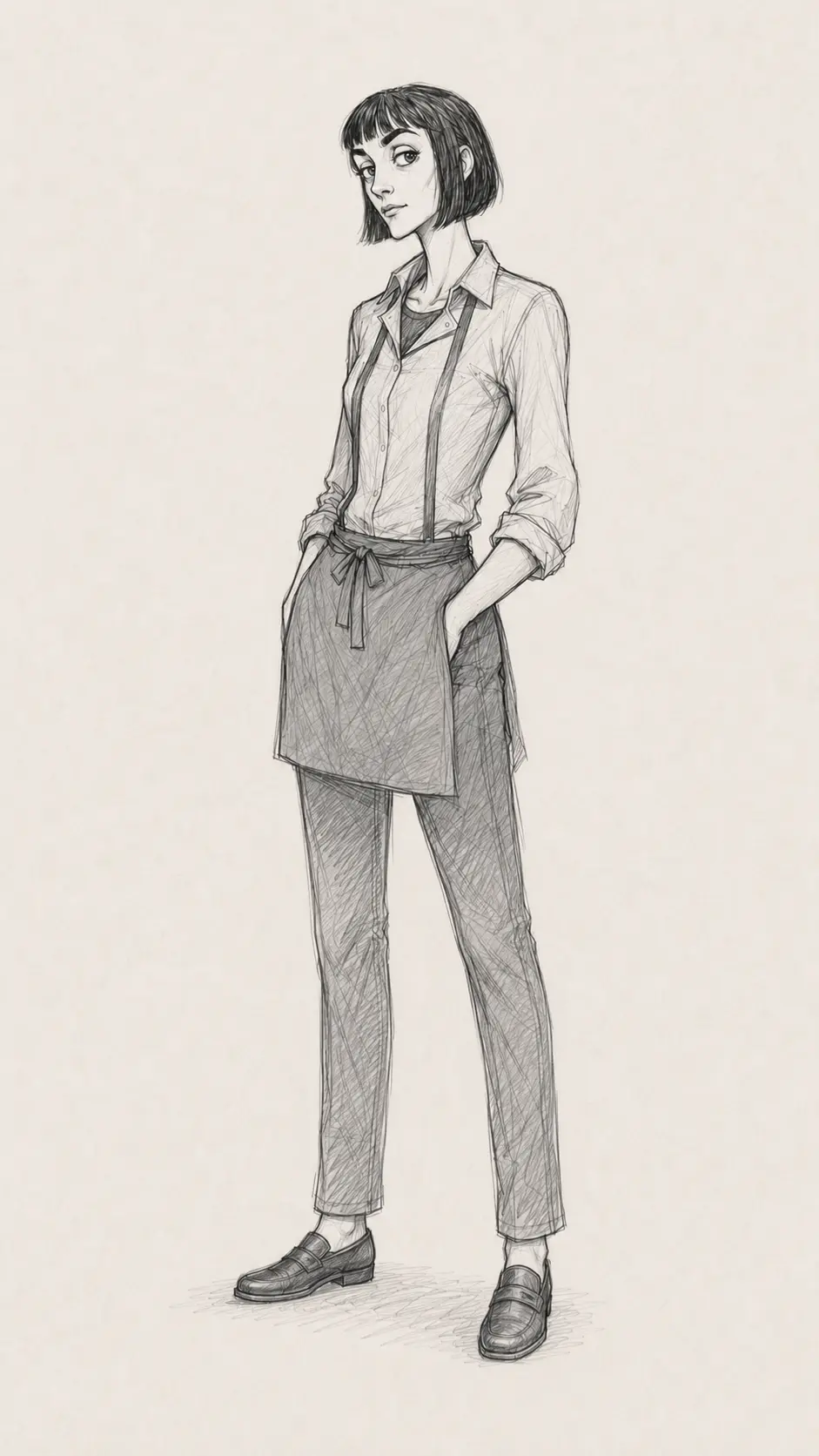
Context: Early morning. The kiosk outside the courthouse.
DANA
Do you always feel guilty about something?
NORM
Let’s say… I get ahead of my inner judge.
NORM
Just a difficult night.
DANA
Classic serial-killer answer.
Dana is Norm’s opposite: strong, integrated, not enslaved by the system.
The chapter’s final confrontation
Context: Evening. Bathroom. Norm has had enough.
NORM
You’re free. Like the fucking genie from the lamp, you’re free. I want nothing more to do with you. Whoever wants out can leave; whoever wants to stay inside can stay. I’ll hide in some remote corner of my brain. Goodbye.
NORM
I even managed to make myself abandon me.
This marks the end of the first chapter and the escape of Norm’s fifth personality.
WHY THIS GAME
This is the game closest to me.
Norm is a lesson I wrote for myself. A personal fairy tale about something I believe deeply and almost never practise.
Being myself. Being enough for myself. Not becoming a thousand different versions of myself merely to force myself into the world, a relationship, or sheer survival.
I wrote this game to put one of my greatest difficulties into play.
PROJECT STATUS
The project is currently in an advanced narrative pre-production phase.
The following are defined:
- worldbuilding
- first-chapter narrative arc
- identity structure of the personalities
- main and secondary characters
- tone and function of the dialogue
- integration of narrative and decision mechanics
The project includes:
- solid narrative documentation
- examples of in-game dialogue
- examples of scenes and narrative gameplay moments
The project is designed to grow modularly. Its narrative is already structured to support design iterations without losing coherence or direction.