
Italiano

XYASMINE SAFI

narrative and creative designer

I work with the je ne sais quoi.
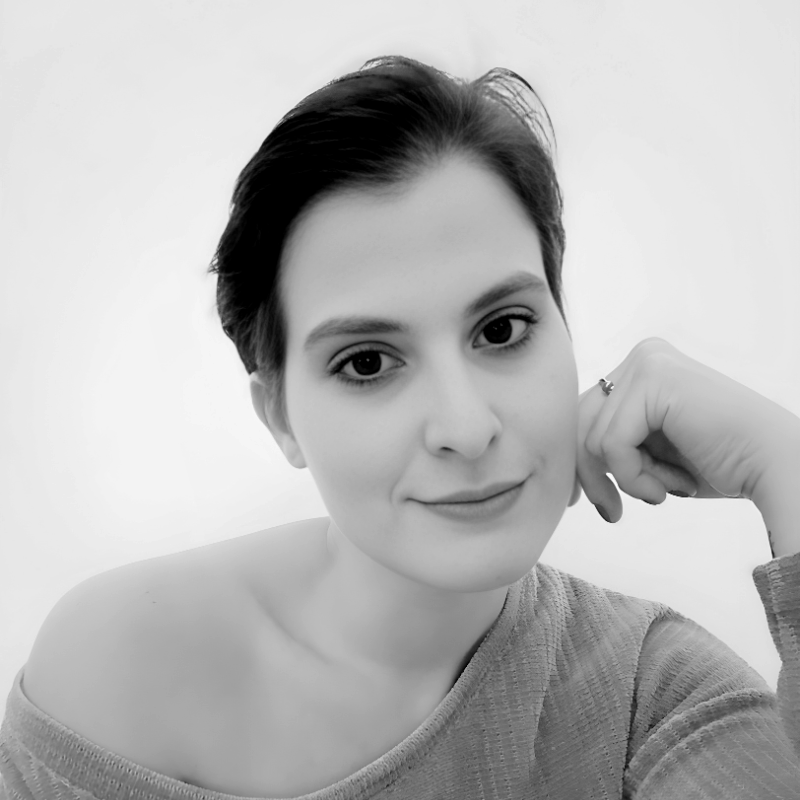
Black-and-white portrait of Yasmine Safi
> system_started_ (but constantly updating)
Yasmine Safi

Yasmine, born in 1990. Narrative and creative designer.

I write content, build structures, and give shape to projects. I work with implicit matter: the part made of direction, tone, intuitions, and details that exists before the words have even been found.

I work with the je ne sais quoi.

> running_ (slowly)
> the_work_that_pays_the_bills_

WHAT I do

> tools_of_the_trade_

Core skills.

01

Narrative design

Concepts, formats, content architectures, experiential tools, case studies, and narrative journeys.

02

Writing and ghostwriting

Essays, LinkedIn posts, web copy, professional bios, presentations, and editorial materials.

03

Strategic communication

Tone of voice, key messages, positioning, project content, and campaigns.

04

SEO / GEO / web content

H1 headings, meta descriptions, FAQs, page structure, and information architecture.

05

AI workflow

Prompts, brainstorming, editing, file organisation, content structuring, agents, and operational methods.

06

Experiential tools

Narrative formats, game mechanics, and immersive structures for learning.

07

APIs and automation

Tool integration, connected platforms, automated workflows, data management, monitoring, and operational processes.

08

Project Management

Project planning, coordination of people and materials, event management, deadlines, responsibilities, and operational development.

> the_question_comes_automatically_

WHY DO YOU WRITE WHEN THERE’S AI?

Eight questions. Not to prove that AI is wrong or that I am right, nor to defend a profession, as many argue, from extinction. More simply, to understand what I mean when I say that I keep writing while using AI practically every day in my work.

> serendipity_with_a_method_

METHOD.

01

PROJECT CALIBRATION

No fixed formula. Every project is built to measure, beginning with the person who will receive it.

02

SERENDIPITY
WITH A METHOD

The best ideas are not flashes of genius: they are a system built over time, fed by every new project, field of study, and piece of knowledge, making that moment of intuition inevitable because a network of information is already waiting to connect.

03

RECOGNISING THE RIGHT DIRECTION

I know I have found the right path when brand, client, and audience hold together without being forced.

> how_i_work_and_why_

PORTFOLIO.

> oh_god_i_have_to_write_about_myself_

YASMINE?

Yasmine, born in 1990. Narrative and creative designer. A mix of questions about life, myself, and work that no one has ever really asked me. I answer them anyway.

Click the question, not the +.

What does it mean to be “creative”?

To me, being creative means looking with attention and curiosity: it means caring. It is not about creating from nothing—we devoured nothingness years ago, through literature, music, and cinema. A creative person looks at that entire mass of inspiration and, even with some fear, tries to offer one more angle. You do not necessarily need an ingredient no one has ever seen. Think of a dish: you can begin with something familiar and work on everything around it—the setting in which you serve it, the moment when it arrives, the way you tell its story. It is like shuffling an enormous deck in which every tiny nuance creates a new card.

Is there a project you would approach differently today?

Not the project: the approach. Today I would tackle it with a more mature method, greater confidence, and more room for risk.

Has a client ever rejected an idea you still regret losing?

No. My ideas remain mine: they live in my original work. With a client, there is always a compromise to be found. I offer one hundred per cent of my creative space, but it serves the person who commissioned the work, not me.

What does writing mean to you—and what does it mean after the advent of AI?

Writing is not the final act. It is not black text on a screen or ink on paper: it is design. This is clearer in professional work, where text is always in dialogue with something—a space, a rhythm, a visual system. I work constantly with the people designing the image, layout, or video, and the text adapts to that space, not the other way round. The same is true of my own writing, whether a novel or a short story. Writing begins in my mind as an amalgam of chaos. I shape it and impose choices upon it. The soul of a story also travels through its distortions and ugliness: to me, it is a balance between beauty and ugliness, sense and madness. That is where the difference with AI lies. Unless it is guided, AI does not go through that process: the chaos, the struggle, the confusion, the deleted sentences, the obsessive rewriting. We are all Dr Frankenstein; we always have been. Nothing is original, because everything is inspiration; everything has already been written, painted, or said. Painters copied the masters in order to learn; musicians sampled before there was even a word for it. AI does nothing different: it takes pieces of existing text and stitches them together according to statistical probabilities. The difference is not in the pieces. It lies in the creativity of whoever chooses them, marries them, kills them, brings them back to life, and binds them together again.

What bores you about this work?

It does not bore me. On the contrary, I consider myself lucky: I write for a living; I create for a living. If I had to name something, it would be certain manual newsletters, instructions, and reminders—tasks that could be more automated. Those alienate me a little.

What do you think of video games?

I consider them a narrative art form in their own right. My favourite genres include story-driven, investigative, psychological, horror, and many point-and-click games where story and narrative design come to the fore. I often return to Wadjet Eye productions, Kathy Rain, I Have No Mouth and I Must Scream, Silent Hill as an exploration of trauma through space, Koudelka, Final Fantasy for the structure of the journey, and Devil May Cry and Bayonetta for their extreme, uncontained creative freedom.

What is the idea behind your logo?

The point is that the X symbolises error. We often mark an error in red and write the correction beside it. I reject that gesture: I write over the error and make it an integral part of me. I do not cut away my past selves. I am a hoarder, a collector of identities: each has nourished the next one—the person I am now.

Why is horror your favourite genre? Why fear?

I do not enjoy the sensation of being afraid. That is not why I love horror. I love what causes fear, how it does so, and why. There is something electrifying about knowing the monster before the monster gets inside you. Fear is not a jump scare. Like every emotion, it has shades. I recognise it, for example, as a mechanism in people: unexpressed potential, restrained tension, unresolved emotions working beneath the surface. I am fascinated by its power to obstruct other emotions. At least from my perspective, it is the only one that permanently coexists with all the others. Being happy and afraid. Being in love and terrified. Being sad and fearing you will remain so forever. Anger, and the fear of being unable to control it. Shame, and the dread of feeling it or having to contain it. I also see value in works regarded as minor, such as Goosebumps: training fear as we train any other emotion.

Is there an industry cliché you cannot stand?

The belief that one exceptional person, capable of doing everything, can sustain the entire creative process. Just look at the credits of a film or video game: endless lists of people. What makes a good creative product work is not synergy; it is symbiosis between the parts.

Why do you write instead of doing something else?

In the environment where I grew up, talent had to be something clearly defined: knowing how to sing or dance, being good with numbers, having a passion for history. Writing was not on that list. Everyone can write—for school essays, notes, or putting their thoughts in order. But if you meant to write seriously, it had to be literature, something fit for a book. Saying “I like imagining, creating characters, creating worlds” seemed too vague to count. I write with my mind, partly because what I create takes different forms depending on the medium. More than a writer, I call myself a creative: writing gives me the space to express myself. Sometimes I need to write a scene or an emotion that I cannot render visually; it works better on the page. At other times an image says more, or an image with sound, or silence. Being creative makes me a hybrid across all these forms. I wish I could draw, dance, or sing. I cannot. Writing remains: the tool I use to give shape to what I imagine.

DEVIA.
> a_cut_that_deviates_

LOBOTOMIA creative

Historically, a lobotomy is a cut that switches something off, correcting what has been judged deviant. Mine is the opposite: a cut that pushes towards deviation, opening a space in which to think for oneself again.

Divertere, means precisely this in Latin: to deviate, to change direction. Not empty entertainment, but creativity that diverts.

This is where I keep what I write when no one commissions it: stories, a novel, game documents, essays, and macabre whims.

When you enter the stories, you will be able to choose the tone of your reading.
> write_to_me_no_pressure_

CONTACT

For publishing proposals, collaborations, and projects.