Communication Is Not Foie Gras
I was given a new tool at work.
Nice, right?
I love AI when it analyses, cross-references data, brings order, builds tables—when it gives me the whole picture.
I like it less when it starts making suggestions.
Not because the suggestions are wrong, but because they come straight out of a marketing handbook. To me, standard marketing is now a language stripped of invention, ideals, and inspiration—a language that keeps repeating itself even after the context has changed.
To be clear, I am not blaming AI. AI draws on the marketing written by us—humans, let me stress.
It does not create from nothing; it returns what we have already fed it.
A typical suggestion from these new tools sounds like this:“Publish three to five short case studies—businesses and courses—with figures and testimonials, and distribute them across LinkedIn, your website, and WhatsApp.”
The case study, the testimonial, the “make a reel where we tell people how it went,” complete with strangers wearing Coca-Cola smiles—it is pure Mad Men.
In the first season of Mad Men, there is a moment that, to me, captures the era’s idea of marketing. The agency is working on a campaign for a cigarette brand while fears about their toxicity are mounting. Ideas pile up; someone flirts with death, with risk—but the final direction goes elsewhere: shift the conversation towards the process, the growing, the sunlight, the toasting.

There, advertising is not meant to tell the truth about the product.
It is meant to tell the consumer: you are fine, you can relax, there is nothing to fear.
The keyword is: reassurance.
I say: enough reassurance.
It is time for invention. We should stop seeking constant confirmation and start looking for ingenuity, imagination, style, voice, angle, position, courage, force—for personalities that try and try again, even when they get it wrong.
And what do we do instead? We end up accusing AI of “all being the same”.
We shout and bristle because there is nothing new. But if we feed AI nothing else, it cannot return anything new.
The truth I would like communication to adopt lies elsewhere. Perhaps it will end up in future handbooks, but for now it does not reflect the idea of communication we need today.
Communication must not be foie gras.
Foie gras exists only because someone force-feeds a duck until it loses all sense of hunger.
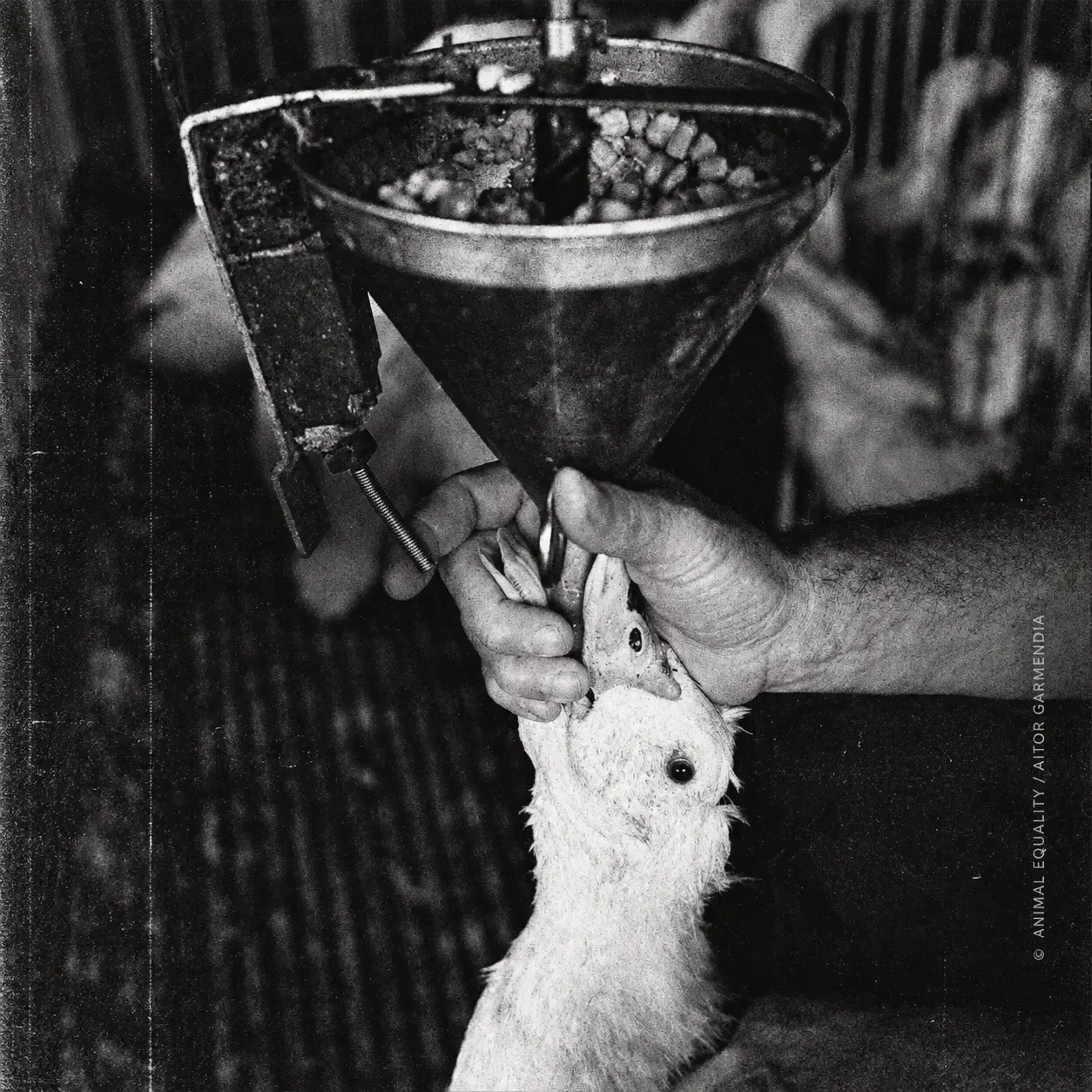
I do not like foie gras—not only as a matter of ethics, but as a matter of taste.
I would rather explore new flavours. It will not be easy, but at least it will not be banal.